
Grate Expectations: Thanksdriving on Vansgiving
A Van Life View of Thanksgiving at Home and on the Road

Thanksgiving is a day to be grateful. I am grateful for having family, but this is a hard year for us. We finally lost both parents. Our Mom passed away in February 2025, rejoining our Dad, who died in January 2021.
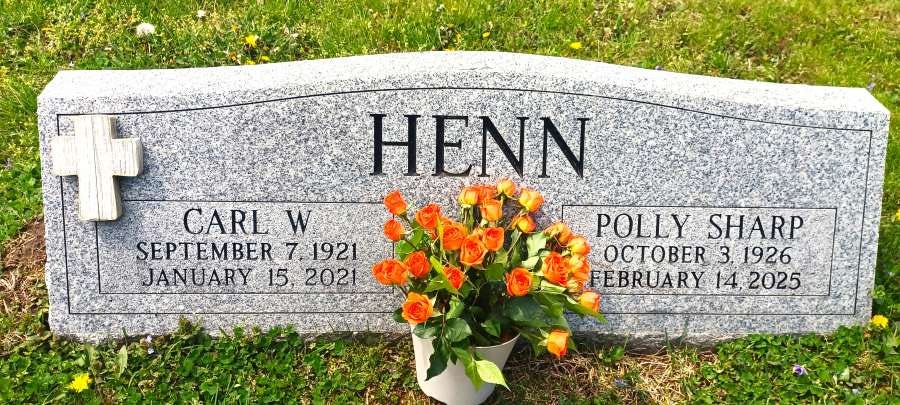
It is a shock when your parents are gone, and you realize that you are alone at last. But not to start on a low note.
To start, I want to thank myself for driving from Washington, DC, to spend the holiday with my sibs. Let’s all thank ourselves when we have done a good thing.
Participating in a large family Thanksgiving celebration can be precarious. Emotions may run high. In my family, it can be hard to tell. More on that later.
***
A word about Thanksdriving.
It has become customary for us to drive great distances to be with family or friends for Thanksgiving. I made up a new word for this phenomenon: Thanksdriving. (Writers, even amateurs like me, like to make up new words. You can, too.)
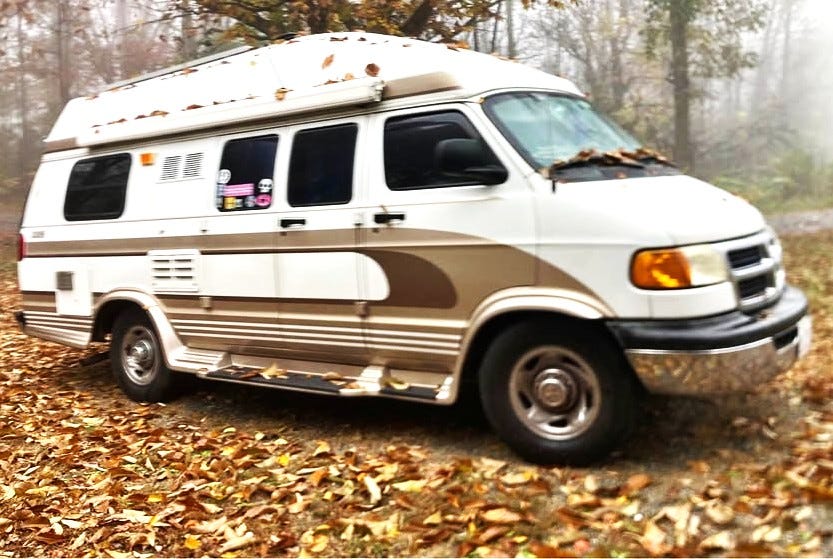
The other new term I used, Vansgiving, refers to van life folks who are celebrating the holiday, not in a home, but at home out there, somewhere, on the road.
***
The Leaders of the Band
A major question after your parents are gone is who takes charge of the family? When there is trouble, who has the authority to tell the siblings to stop fighting?
Most of us don’t think about it till they are gone, but our parents are the leaders of the band. Try to pick up the band leader’s baton. See how fast the others object!
***
Here I am in Indianapolis with my sibs, their spouses, and our assembled children. Am I grateful that my siblings invited me to join them for Thanksgiving?
Thanksgiving is a complicated holiday full of confusing, conflicting historical narratives. It is also fraught with the risk of resurrecting old sibling issues.
Why am I here? Was it wise to come? As the author Thomas Wolfe wrote, “You can (never) go home again.” (To which I might add, “unless you do.”)
One easy way around the potentially fraught family situation and grief would have been to leave the D.C. area and drive south for the winter to celebrate Thanksgiving alone, as I have done in the past.
Take the Long Way Home
In past years, my dog and I spent at least two days driving to Indianapolis. We got on I-70 and drove 600 miles due west. This year, I felt compelled to take a longer trip and undergo on an emotional journey as well, spending hours sorting through complicated emotions about loss, grief, and the meaning of holidays.
Grief is hard and passes slowly. Holidays can be fun and also memorable, but deep down, celebrating them can be hard. I don’t mind when things are hard.
As Tina Turner sings in Proud Mary, I never, ever do things easy. I prefer to do things the hard way. It makes the turkey taste that much better.
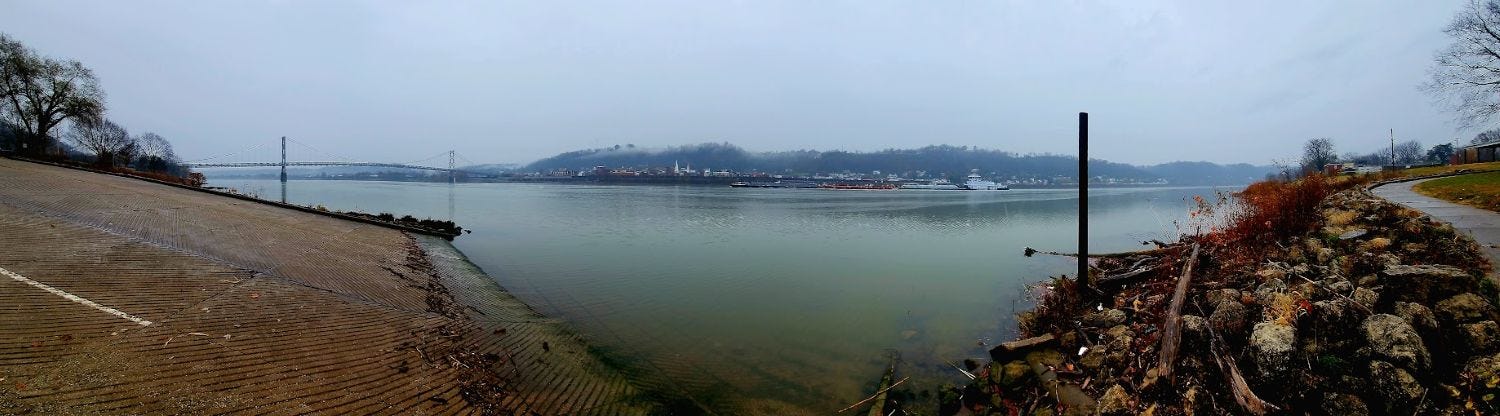
So, in my fourth year full-time in van life, I got off the I-70 at Wheeling, West Virginia, and took Ohio Route 7 South along the Ohio River to Cincinnati.
***
Old Man River
I have driven 100,000 miles in the past three years. I know the interstate system is a fast, efficient, and boring way to get where I am going. Taking secondary roads, especially those that wind along river beds, is more relaxing.
Rivers, like the course of true love, never run straight; they meander.
Being on the road for four days, I had ample time to sort through some complicated feelings and ponder difficult questions. Would my siblings and I stick together or drift apart? Do parents hold the family together? Could we figure out how to keep it going?
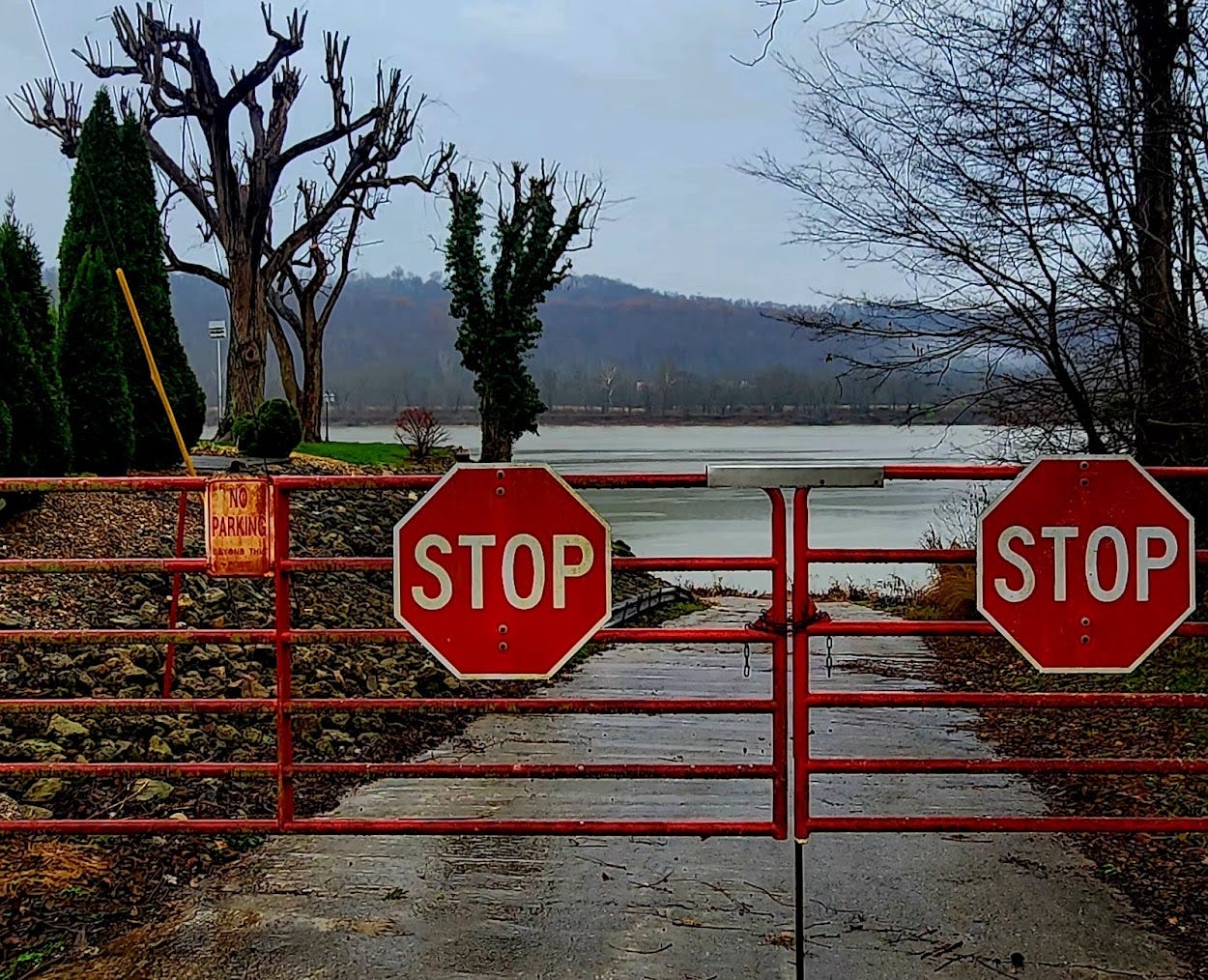
The slow, winding, grey drive along the Ohio River worked out well. I alternated between the northern and southern sides, whichever was closest to the river. The Ohio was behaving itself, a mild, well-behaved river.
***
My Emotional Rescue
Returning to the Thanksgiving theme, I thought about what the holiday means to us. For most of us, Thanksgiving means celebrating at home and eating with family.
Not me. Not always.
***
In 2023, my second year in van life, I celebrated Thanksgiving on the road.
After finishing my annual medical and dental visits in my hometown, Falls Church, Virginia, it was time to head south. Due to the forecast of a polar vortex, I began motoring down to Mexico for the winter to get far from the cold.
Where we stopped for the night, I cannot recall. Due to the pesky polar vortex, we had checked into a dog-friendly hotel. I had sent out messages on Facebook Van Life pages to find other van lifers nearby. No luck.
I was on my own. As a matter of necessity, I had to find a place to eat. At the steak joint across from the hotel, a sign on the door said, “Closed.”
Down the street, in the dark, I spotted the blazing neon sign of a nearby Chinese restaurant. The joint was packed. I asked to sit at the bar. They squeezed me onto the last barstool. The football game was on. Almost like a normal Thanksgiving.
But sprinkled around the restaurant, I saw a motley crew of miscreants eating dinner at the restaurant that night. Was I, too, a miscreant? Was that why I was alone?
Then, I thought of my dog sitting alone in the dark van, and asked the bartender to box up the meal. In the dark, cold van, I shared Thanksgiving dinner with my dog.
Proving I could survive Thanksgiving alone did not deter me from wanting to spend it with family. The next year, I went home for my Mom’s last Thanksgiving.
She is gone, but even now, in my family, there is unfinished emotional business.
***
Back to my four-day trip along the river, sleeping at night in the van with my dog, despite the cold, rain, and the wind, and the lack of a hot shower in the morning.
Why did I do it? I get that question a lot. You either get van life, or you don’t. It’s less comfortable than home and requires a certain stoicism, which most people who grew up in the Midwest of my youth acquired without realizing it.
Life was hard; we were, too.
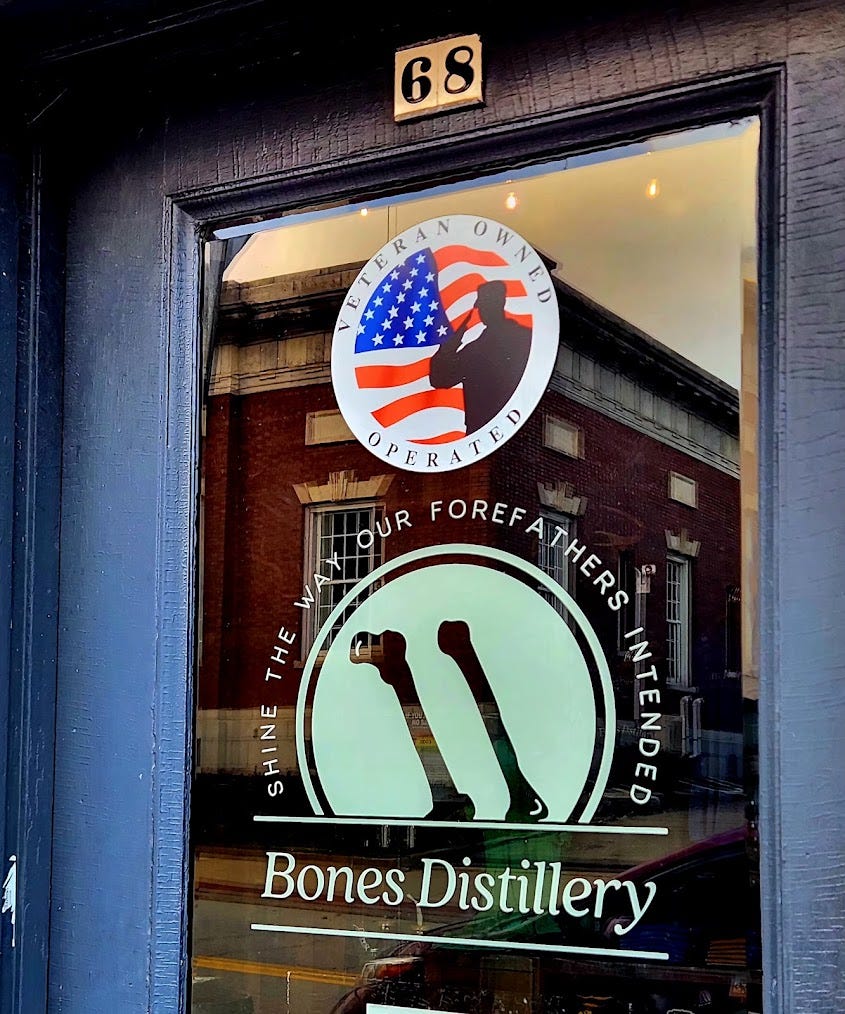
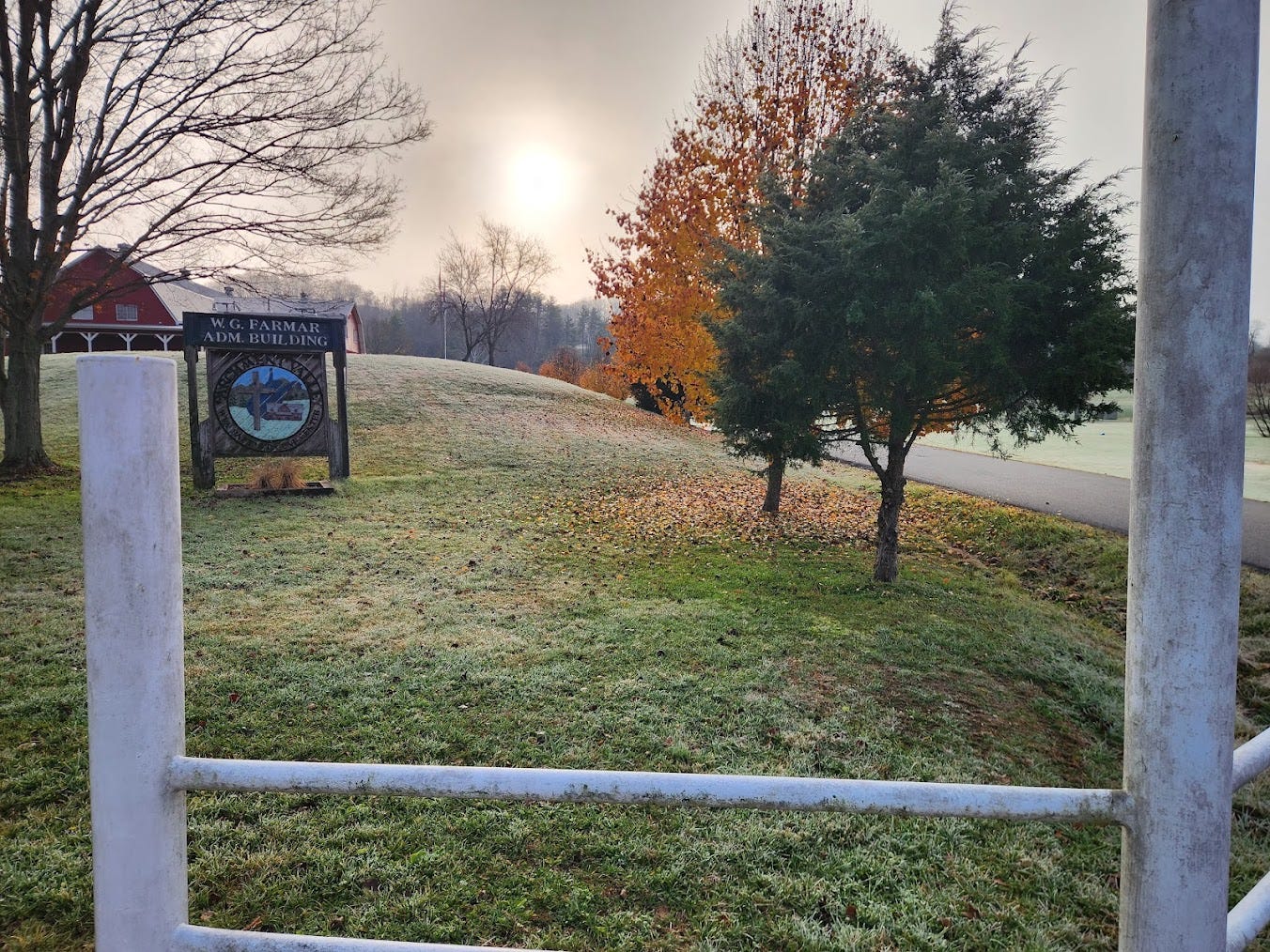
Van life also offers a chance to see and experience America in a different way. The first night, my van host was a very dog-friendly distillery located in Washington, Pennsylvania. The next night, after driving further south, we stopped at a Baptist conference center in the tiny, remote town of Ripley, West Virginia. Hallelujah!
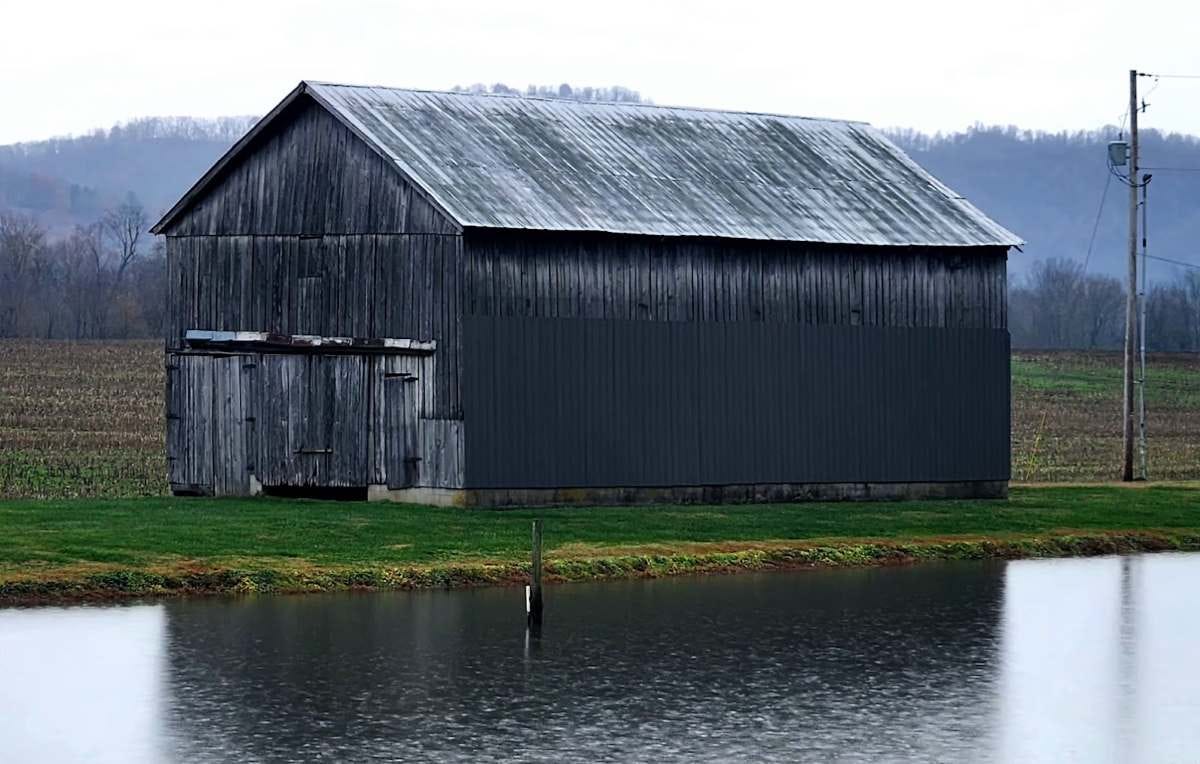
The third night found us at a place called Happy Farm, near Minton, Ohio. The farm may have been possessed by the devil. Stephen King could have dreamed this up.
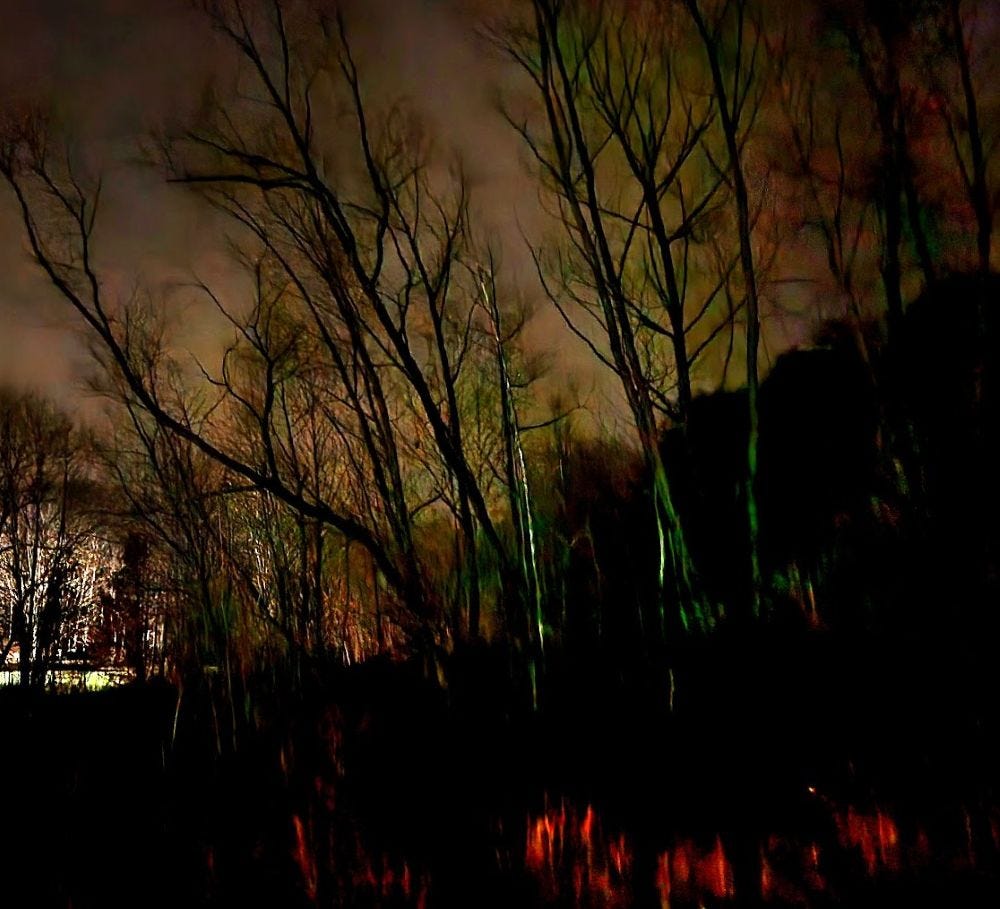
Instead of sleeping in the same bed, night after night, year after year, van life allows a person to experience a range of fascinating and potentially deadly sleeping situations.
***
I had survived a Thanksgiving alone in my van . Why not continue celebrating alone?
The smart move, climate-wise, would have been to head south from the DC area to avoid another impending polar vortex. The thermostat was forecast to plunge below freezing in Indiana by Thanksgiving, and my van was not set up to deal with it.
***
Show Some Emotion
With mixed feelings about heading to the Midwest in late November, I accepted the invitation for Thanksgiving. My two sons would be joining us as well. Four of my sisters have dogs, but theirs are reactive to other dogs entering the house, so I am staying with a sister who has multiple cats, in a small, heated studio built out in back.
Only in a large, complicated family like mine would the lone brother, traveling with a dog, stay with the one sister who is a cat lady.
After much thought, a reason for hesitating occurred to me: Showing some emotion. It’s a thing we don’t do much in my family. I didn’t know families had emotions until I saw movies about Italian Americans and Irish Americans. Everybody was screaming.
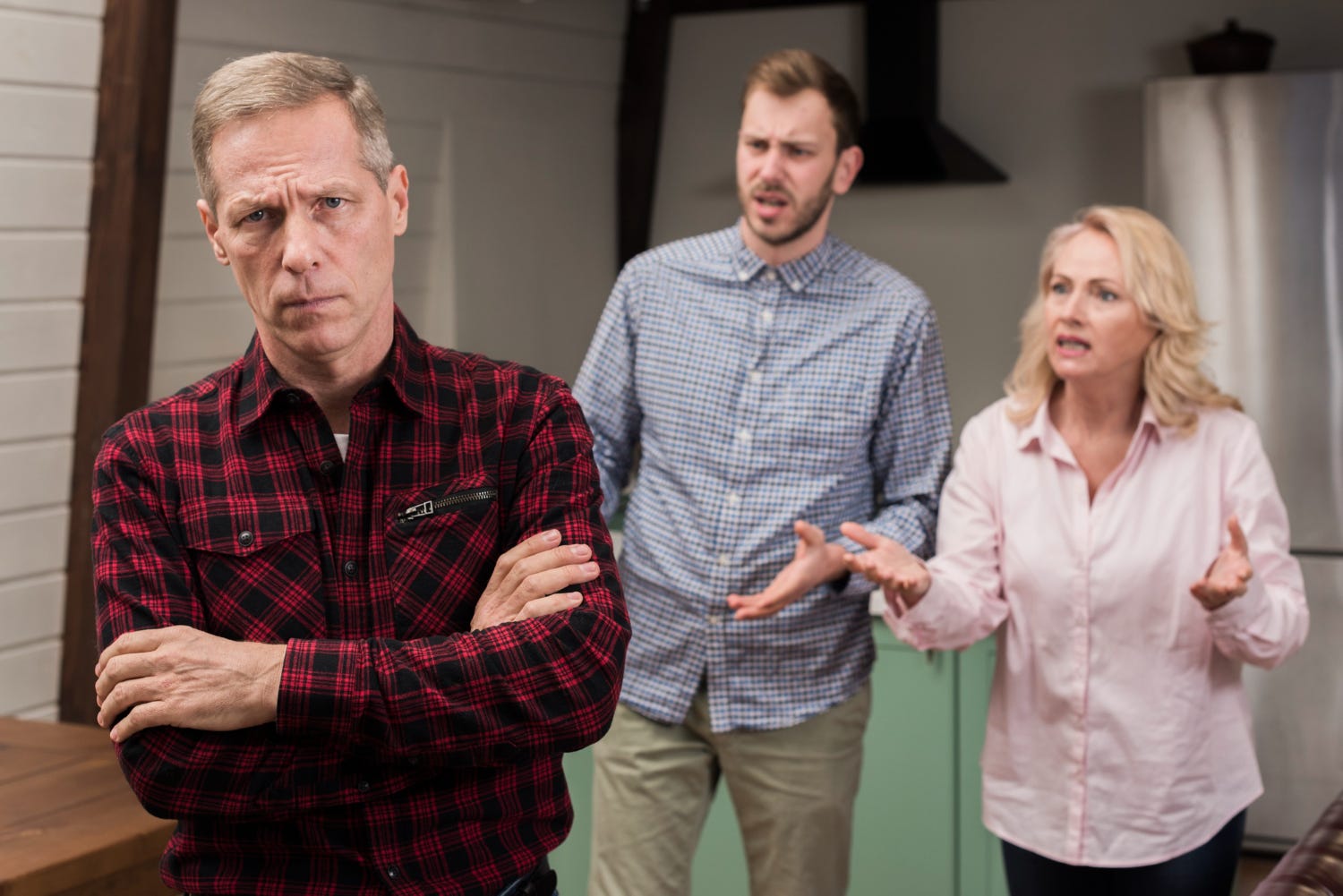
How do you wind up in a family that, given a choice, bottles up its emotions?
We are German on my father’s side, Scots-Irish on my mother’s. My father, who grew up in a German immigrant community, was a WWII veteran of calm temperament: humble, non-confrontational, cheerful, an emotionally-distant father-knows-best.
My mother’s background was Scots-Irish. We grew up in a home where conversation centered on safe topics. The Scots-Irish temperament is known for being stoic, private, practical, and non-demonstrative. My Mom was a model of efficiency. My sisters can also plan and carry off an elaborate family holiday meal with apparent ease.
As kids, My Mom and Dad did not often tell us, “I love you.” Unwittingly, they passed that emotional reserve on to us. We also struggle with I love you. By the ‘80s, I had married and had my own kids, and it was common to tell your kids you loved them.
Around this time, it struck me how much our parents had done for us, and how little appreciation I had shown. I began calling them weekly. At the end of a call, I said to my Mom, “I love you!” It just sort of popped out. I was surprised that I had said it.
There was an awkward pause on the line, then she said, “Umm, me too.”
***
Slowly, over time, I worked on my parents; perhaps my sisters did, too. By her ‘90s, my Mom was in a nursing home, dealing with dementia, and becoming childlike. I ended calls by saying, “I wuv you, mommy.” She’d respond, ‘I wuv you, sonny boy.”
It took us decades to get to a level of mutual comfort with the words, “I love you.” My sibs and I still struggle to say, “I love you,” to each other. We feel it, but can’t say it.
But we all knew our Mom loved us to bits, in action, even if she couldn’t easily say it. She cooked wonderful meals every day for decades, sewed dresses for the girls, and created wonderful, elaborate holidays for us to enjoy each year.
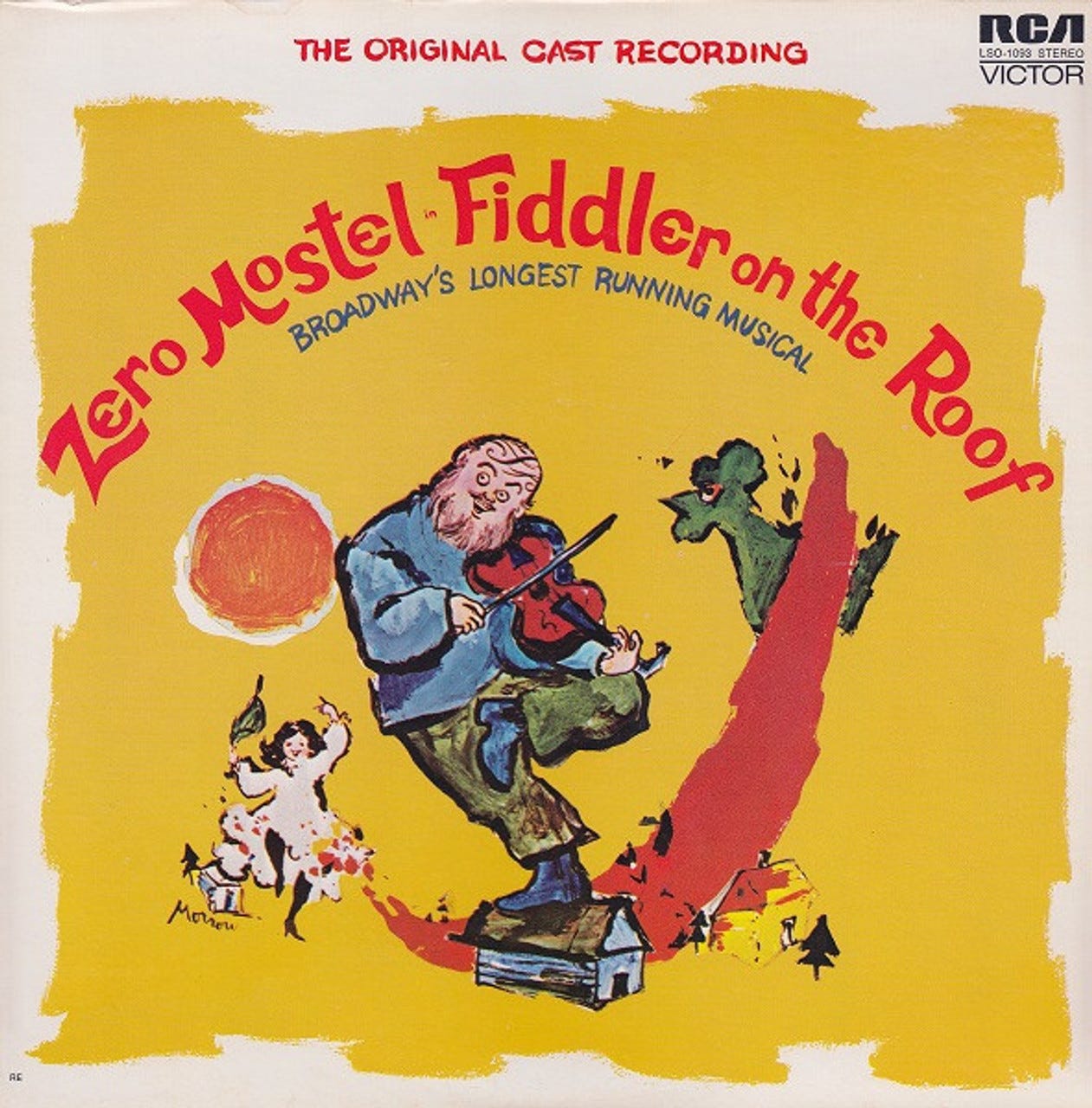
As they sang in the Fiddler on the Roof, “If that’s not love, what is?”
***
A major frustration for me as a boy was that my parents did not let me beat up my sisters once I was big enough to do so. I also wasn’t allowed to make them cry.
My plan this year is to stand up at the Thanksgiving dinner table, and ask my sisters to turn to the sister next to them, look her in the eye, and say, “I love you.” As far as I can recall, none of us has ever dared to express this emotion so openly. I can’t wait.
My Mom might not have allowed it. “You want us to say we love each other? We’re not going to have such foolish talk. Just eat your food.”
Here is how I envision it:
Sister 1 to Sister 2: “I luh… uhh… luh…”
Me: “Good. Now, add the “vuh” sound.”
Sister 1: “I luh vuh... yee… “
Me: “OK, now add the ‘ooo.”
Sister 1: “I luh-vuh yee-ooo”
Sister 2: (Bursts out crying)
***
This is really what Thanksgiving is about: showing that we are grateful for each other, and for the opportunity to be together, at least once a year, to celebrate with a meal that is more than mundane, more than nourishment, a ritual of family and love.
A word about the title of this blog, Grate Expectations. Curiously, in English, we can be grateful, express gratitude, or be an ingrate, but we cannot “grate” someone.
Let’s thank the Anglo-Saxons, whose word “thank” replaced the Latin word “gratus.” The root, thank, originally referred to a thought about someone, then a good thought.
Think, thank, thunk. I knew it! Finally, I found the proof.
Many of us get hung up on the complicated reality of expressing how we feel about each other. Instead, we talk about the food, football, the weather, and everything else, except how we feel, and why getting together every year actually matters.
***
Rolling. Rolling. Rolling on the river. The river road really helped.
I actually had time to think, to reflect deeply, and to interrogate myself about what the holiday means, or should mean, and how I could make it a really special one this year.
It may be an emotional breakthrough. I can’t wait to make my sisters cry. Now that is something to be thankful for, not in a mean way, but by opening frozen floodgates.
Afterthoughts
When Thomas Wolfe said, “You can never go home again,” he meant that you have changed since you left, while others who remained home have not. Not as much.

What if you try to bring about a good change and influence others to accept it? Be aware that they may try to kill you. Plan your escape carefully in advance.
Share Your Story
Thank you for taking the time to read this piece. I’d love to hear your reaction, if you care to share. It means different things to all of us. All of them are valid and matter.
End Notes About Words
Think about the words we use and where they come from. The origins are often quite surprising and a cause to reflect. Gratitude is great, but it can grate on your nerves.
Hope you had a Happy Thanksgiving.
You explored so many of the complications, emotions, and feelings that come up during the holidays - thank you for sharing them!
Very nice, complicated, and nuanced piece, Carl.